
It could additionally be as a end result of varied reasons, corresponding to non-compliance with listing norms or ineligibility. However, such corporations may be operating in interesting spheres, corresponding to a preferred expertise or have a product that has scope for development that investors are keen to spend cash on. You should clearly keep in thoughts that buying and selling within the OTC market is clearly not meant for everyone.
Or they may meet itemizing requirements, however administration doesn’t need to pay listing charges. Sketchy corporations stay off the listed exchanges to avoid scrutiny and regulation. One of essentially the most vital is counterparty threat – the potential for the other party’s default before the achievement or expiration of a contract.
Moreover, the dearth of transparency and weaker liquidity relative to the formal exchanges can set off disastrous occasions throughout a financial disaster. The flexibility of by-product contracts design can worsen the situation. The extra sophisticated design of the securities makes it harder to find out their honest value. Thus, the chance of hypothesis and surprising events can hurt the soundness of the markets. Penny stocks and other OTC securities are readily available for trading with many of the on-line brokerages, these trades may be subject to larger charges or some restrictions. As with any investment decision, it’s essential to completely contemplate the pros and cons of investing in unlisted securities.
OTC trading can open new avenues for buyers trying to broaden their portfolios and understanding the specifics of the OTC market is a crucial part of making knowledgeable investment selections. As all the time, seek the assistance of a financial advisor if you have questions about your specific scenario. The major advantage of OTC buying and selling is the wide selection of securities obtainable on the OTC market.
What’s The Otc Markets Group?
We operate the regulated digital market the place SEC-registered, FINRA-member broker-dealers efficiently trade OTC securities. Competing broker-dealers (“market makers”) show the worth at which they are prepared to purchase (the “bid”) a safety, and the worth at which they’re prepared to sell (the “ask”). Our real-time data allows broker-dealers to execute consumer trades at the best costs with a choice of counterparties. Stocks that trade via OTC are commonly smaller corporations that cannot meet the trade listing requirements of formal exchanges. Also, OTC buying and selling increases general liquidity in financial markets, as firms that cannot commerce on the formal exchanges achieve entry to capital via over-the-counter markets.

We monitor market exercise and real-time suggestions to establish outliers or issues. In many circumstances, OTC Markets Group makes the request to company executives to supply additional public disclosures to the market. OTC Pink Open Market, formerly generally known as pink sheets, is the riskiest degree of OTC trading with no requirements to report financials or register with the Securities and Exchange Commission. Some legitimate companies exist on the Pink Open Market, nonetheless, there are many shell companies and firms with no precise enterprise operations listed here. StocksToTrade on no account warrants the solvency, monetary situation, or investment advisability ofany of the securities mentioned in communications or web sites.
What’s The Market For Otc Stocks?
OTC Link ATS is what’s generally identified as a professional interdealer quotation system (“Qualified IDQS”) that electronically connects a community of regulated broker-dealers. With the modifications to Rule 211, OTC Link ATS can play a higher position in bringing an organization onboard to begin to be quoted on our markets, as well as monitoring ongoing issuer disclosure. This regulatory status can even streamline a company’s pathway to the public markets. The OTCQX doesn’t listing the stocks that sell for lower than 5 dollars, generally identified as penny stocks, shell companies, or corporations going by way of bankruptcy.

Investors can commerce OTC on Public with the identical out there funds they might use for some other trade, and customers with funded accounts routinely have access to OTC buying and selling. Bonds, together with bonds bundled into ETFs, are not usually traded on centralized exchanges. Instead, most are exchanged OTC on the secondary market via broker-dealers. We use data-driven disclosure processes to watch securities based mostly on criteria and rules in place in addition to the timeliness of their disclosure.
What Sorts Of Investments Commerce Otc?
The stakes are high, however the potential for tremendous gains is there. If you watch Level 2 on an OTC, you could even see something strange. There’s often a vendor at a much larger worth than the current action. Now, when what is otc trading you place a market buy order and also you get routed to that broker-dealer — properly, you could be the one taking that supply. You typically see a quantity of minutes of motion in one path earlier than the price modifications.
Market makers serve 1000’s of on-line, retail, and institutional broker-dealers that send investor orders to be executed electronically, at the most effective value. This is for informational functions solely as StocksToTrade is not registered as a securities broker-dealeror an investment adviser. Stocks and bonds that trade on the OTC market are sometimes from smaller corporations that don’t meet the requirements to be listed on a significant change. The lowest tier is the Pink® Open Market, which is the default marketplace for broker-dealers who need to trade OTC securities. This tier contains overseas companies, penny shares, shell corporations, and other corporations that choose to not disclose monetary info.
Things To Remember When Buying And Selling In Otc Shares
With that comes a duty to instantly release materials news to the market and correct any misinformation that may affect the market pricing course of. An over-the-counter by-product is any spinoff safety that’s traded in the OTC marketplace. A by-product is financial safety whose value is decided by an underlying asset, such as a inventory or a commodity.
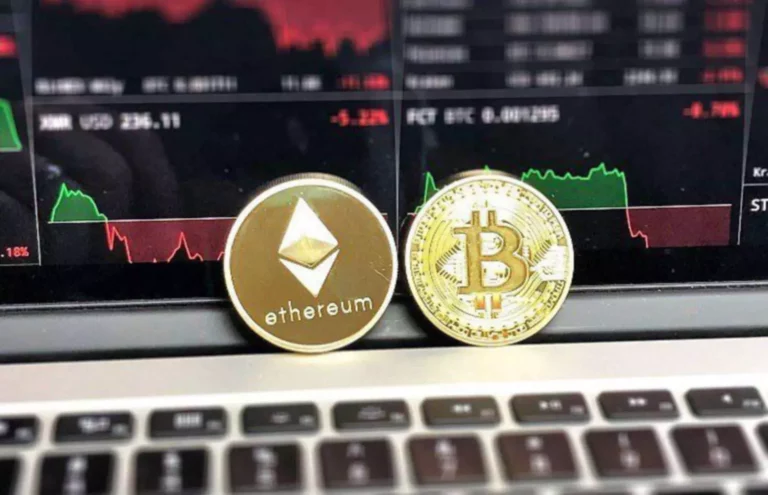
Investors should buy and sell these securities as they would any other inventory, and the broker-dealers provide liquidity by trading from their very own brokerage accounts. Over-the-counter, or OTC, markets are decentralized monetary markets where two parties commerce monetary devices utilizing a broker-dealer. Among property traded within the over-the-counter market are unlisted stocks. When a company is unlisted, it is public and might promote stocks, simply not on a security change similar to Nasdaq or the New York Stock Exchange. The over-the-counter market, popularly generally identified as the OTC market, trades securities not listed on the major exchanges.
Restricted Time Only!
Investment Plans (“Plans”) proven in our market are for informational functions only and are meant as helpful starting points as you discover, analysis and create a Plan that meets your particular investing needs. Plans are self-directed purchases of individually-selected assets, which can embody shares, ETFs and cryptocurrency. Plans aren’t recommendations of a Plan general or its particular person holdings or default allocations. Plans are created using defined, objective standards based on usually accepted investment concept; they aren’t primarily based on your needs or threat profile.
- Another notable difference between the two is that on an trade, provide and demand determine the worth of the belongings.
- It’s a holdover from a time when you could actually buy shares over-the-counter.
- The American depositary receipts (ADRs) of many companies trade on OTC markets.
- When an organization is unlisted, it is public and might promote shares, simply not on a security exchange such as Nasdaq or the New York Stock Exchange.
- Such stocks are traded on the OTC Exchange of India, which is a stock exchange designed solely for over-the-counter shares.
- Over-the-counter (OTC) is the process of buying and selling securities through a broker-dealer network as opposed to on a centralized trade just like the New York Stock Exchange.
“Alternative property,” as the time period is used at Public, are equity securities which were issued pursuant to Regulation A of the Securities Act of 1933 (as amended) (“Regulation A”). These investments are speculative, involve substantial dangers (including illiquidity and loss of principal), and aren’t FDIC or SIPC insured. Alternative Assets bought on the Public platform usually are not held in a Public Investing brokerage account and are self-custodied by the purchaser.
A price for a stock is posted (the “ask”), and then investors make offers for it, bidding in opposition to each other. Banking providers and bank accounts are offered by Jiko Bank, a division of Mid-Central National Bank. JSI and Jiko Bank are not affiliated with Public Holdings, Inc. (“Public”) or any of its subsidiaries. None of those entities present legal, tax, or accounting recommendation. You should consult your legal, tax, or financial advisors before making any monetary decisions.
It’s mainly because they’re both worried about paying the itemizing fees or are subject to the reporting requirements of an trade. An over-the-counter or OTC market is a decentralised financial market. Here, two completely different parties commerce monetary instruments with the help of a broker-dealer. Besides, unlisted stocks are the most distinguished assets that are traded within the over-the-counter market. Whenever a company is unlisted, it routinely turns into public. However, this situation just isn’t relevant to security exchanges like Nasdaq or the New York Stock Exchange.